Savory Garlic Herb Artisan Bread Loaf
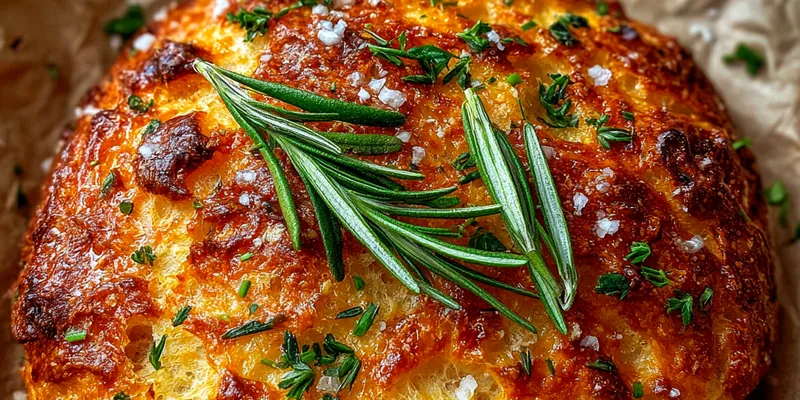
Experience the aroma and taste of the Mediterranean with this irresistible Savory Garlic Herb Artisan Bread Loaf. Boasting a wonderfully crisp crust and a soft, fragrant interior bursting with garlic, rosemary, thyme, and oregano, it’s the perfect companion to any meal. This easy-to-follow recipe brings the joy of freshly baked artisan bread right into your home, making it an ideal appetizer or side for gatherings.

Why This Savory Garlic Herb Artisan Bread Loaf Recipe Works
This recipe delivers an authentic artisan bread experience with minimal effort, making it perfect for both novice and experienced bakers. The secret lies in a higher hydration dough and baking in a preheated Dutch oven, which creates a steamy environment similar to a professional bread oven. This method guarantees that coveted crisp, crackly crust and a wonderfully open, chewy crumb that's infused with savory garlic and herbs.
We've carefully balanced the rich flavors of fresh rosemary, thyme, and oregano with aromatic garlic, ensuring every slice is a burst of Mediterranean goodness. The 'no-knead' approach simplifies the process significantly, letting time do the work of developing gluten, resulting in a superior texture without the strenuous kneading. You'll be amazed at the professional-quality loaf you can achieve right in your home kitchen.
💡 Professional Tip
For the ultimate crisp crust, ensure your Dutch oven is screaming hot before adding the dough. Additionally, avoid the temptation to slice the bread immediately after baking. Allowing it to cool completely on a wire rack is crucial; this allows the internal moisture to redistribute, preventing a gummy interior and ensuring the crust remains perfectly crunchy.
Frequently Asked Questions
Yes, you can! The dough can be prepared and proofed in the refrigerator overnight (up to 24 hours) for the first rise. This slow fermentation actually enhances the flavor. Simply take it out, let it come closer to room temperature for about 30-60 minutes, then proceed with shaping and the second rise as directed.
While fresh herbs offer the best flavor, you can substitute with dried herbs. As a general rule, use about one-third the amount of dried herbs compared to fresh. For this recipe, you could use 1 teaspoon each of dried rosemary, thyme, and oregano, and ½ teaspoon of garlic powder instead of fresh garlic if needed.
The best way to tell if your bread is done is by checking its internal temperature with an instant-read thermometer. It should register between 200-210°F (93-99°C). Visually, the crust should be deeply golden brown and sound hollow when tapped on the bottom.
Absolutely! Once the bread has cooled completely, you can wrap the entire loaf or individual slices tightly in plastic wrap, then aluminum foil. It will keep well in the freezer for up to 2-3 months. Thaw at room temperature and refresh in a warm oven for 10-15 minutes for best results.
This versatile bread is fantastic served alongside a hearty Mediterranean stew, a vibrant pasta dish, or simply with a good quality olive oil for dipping. It also makes an excellent base for bruschetta or a gourmet sandwich. Pair it with a fresh green salad or a cheese board for a delightful appetizer spread.
This artisan bread is best enjoyed fresh on the day it's baked. However, you can store it at room temperature in an airtight container or bread bag for 2-3 days. Refrigeration can dry out bread quickly, so it's generally not recommended unless you plan to toast it. For longer storage, freezing is preferred.
Yes, the dough itself benefits from a longer, cold fermentation, which you can do by refrigerating it for the first rise (8-12 hours or even up to 24 hours). This deepens the flavor. After the cold proof, let it sit at room temperature for about an hour before shaping and continuing with the recipe. Baked bread can be frozen.
To reheat, preheat your oven to 350°F (175°C). If the loaf is whole, mist it lightly with water and wrap it loosely in foil, then bake for 15-20 minutes. If reheating slices, you can toast them or warm them in the oven for about 5-7 minutes until warmed through and crispy.
Recipe Troubleshooting Guide
Too Dense/Heavy
Problem: The bread is not light and airy, but instead dense and heavy.
Solution: This often indicates insufficient proofing (not enough rise) or too much flour. Ensure your yeast is active and the dough doubles in size during the first rise. Also, be careful not to add too much extra flour when shaping, as this can make the dough stiff.
Not Crispy Enough
Problem: The crust is soft or chewy, lacking that characteristic artisan crispness.
Solution: Make sure your Dutch oven is preheated to the full 450°F (232°C) for at least 30 minutes. The high initial heat and steam are crucial for crust development. Also, ensure you bake uncovered for the recommended time (15-20 minutes) to allow the crust to truly dry out and crisp up.
Overcooked Exterior, Raw Interior
Problem: The crust is burnt, but the inside of the loaf is still doughy.
Prevention: This is often due to an oven running too hot or the bread being too close to a heating element. Try reducing the oven temperature by 25°F (15°C) and ensuring the Dutch oven is placed in the center of the oven. You can also cover the bread with foil during the last 10-15 minutes if it browns too quickly.
Undercooked Center
Problem: The edges are cooked, but the very center of the bread is still moist and undercooked.
Recovery: This usually means the bread didn't bake long enough, or the oven temperature was too high causing the exterior to cook too fast. Ensure you bake until the internal temperature reaches 200-210°F (93-99°C). If the exterior is browning too quickly, loosely tent with foil for the remaining bake time.
Burnt Exterior
Problem: The top or bottom of the loaf is excessively dark or burnt.
Prevention: If the top is burning, your oven might be too hot or you need to cover it earlier. If the bottom is burning, your Dutch oven might be sitting directly on a hot spot. Try placing a baking sheet on the rack below your Dutch oven to provide some insulation.
Flavor Balance
Too Sweet: This recipe should not be sweet. If it is, you might have accidentally added too much sugar or used a yeast meant for sweet doughs. Re-check your ingredient measurements.
Too Salty: If too salty, reduce the sea salt slightly next time. Ensure you're using fine sea salt and measuring accurately. Different salts can have different potencies.
Bland: If the bread lacks flavor, ensure your herbs are fresh and potent. You can increase the amount of fresh garlic and herbs next time, or add a pinch of onion powder for more savory depth. A longer cold proof also develops more complex flavors.

Essential Ingredients for Savory Garlic Herb Artisan Bread Loaf
The beauty of artisan bread lies in its simplicity, and this savory garlic herb version is no exception. At its heart, you'll find quality all-purpose flour, active dry yeast for its lift, and sea salt for essential flavor. The magic truly happens with the generous inclusion of fresh garlic and a trio of Mediterranean herbs: fragrant rosemary, earthy thyme, and aromatic oregano. These fresh ingredients are what elevate this loaf from good to truly extraordinary.
Using fresh herbs is highly recommended, as they release potent oils and aromas that dried herbs simply can't replicate. A good quality olive oil also plays a crucial role, contributing to the dough's texture and adding a subtle richness. Don't skimp on the warm water; its temperature is vital for activating the yeast correctly. With these fundamental, high-quality ingredients, you're set to create a bread that tastes like it came straight from a European bakery.
Essential Ingredient Notes
- Yeast Activity: Always check your yeast's activity by blooming it in warm water with a pinch of sugar. If it doesn't get foamy after 5-10 minutes, your yeast might be old or inactive, and it's best to get fresh yeast. This step ensures your bread will rise properly.
- Fresh Herbs vs. Dried: For the best flavor profile, use fresh herbs. If you must use dried, remember they are more concentrated. Use about one-third the amount of dried herbs compared to fresh. Crush dried herbs lightly in your palm before adding to release their oils.
- Flour Measurement: For consistent results, measure flour by weight using a kitchen scale (360g for 3 cups). If measuring by volume, spoon the flour into the measuring cup and level it off; never pack it down. Too much flour is a common cause of dense, dry bread.
Step-by-Step Cooking Process
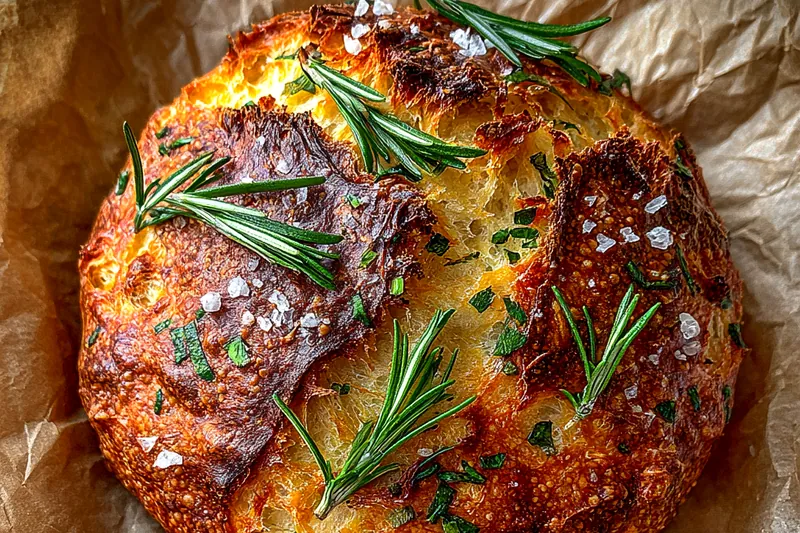
Creating this Savory Garlic Herb Artisan Bread Loaf is a wonderfully tactile and rewarding experience. The process begins with activating your yeast, a simple step that ensures your bread will rise beautifully. From there, it's a matter of gently combining ingredients, allowing time for the dough to develop its structure and flavor through a 'no-knead' method. The key to a fantastic crust lies in the power of a preheated Dutch oven, which traps steam to create a bakery-quality exterior.
Each step, from the initial mix to the final bake, is designed to be straightforward and achievable. Pay attention to the dough's texture – it should be shaggy and slightly sticky, not overly dry. The proofing times are crucial for developing the bread's airy crumb. Finally, the satisfying moment of scoring the loaf and hearing that crackle as it bakes will truly make you feel like an artisan baker.
Key Technique for Perfect Savory Garlic Herb Artisan Bread Loaf: Dutch Oven Baking
The secret to this bread's signature crispy crust and tender interior is baking it in a preheated Dutch oven. When the dough hits the scorching hot pot, the trapped steam helps the crust stay pliable, allowing the loaf to expand fully before it sets. Once the lid is removed, the direct heat bakes the crust to a deep golden brown, resulting in that irresistible crackly texture. Don't skip preheating the Dutch oven thoroughly!
Savory Garlic Herb Artisan Bread Loaf
📋 Ingredients
Dry Ingredients
- 1 ½ cups warm water105-115°F
- 2 tablespoons olive oilPlus more for greasing
- 4 cloves garlicMinced
- 2 tablespoons fresh rosemaryFinely chopped
- 1 tablespoon fresh thymeFinely chopped
- 1 tablespoon fresh oreganoFinely chopped
- 1 teaspoon dried parsley flakes
- ½ teaspoon black pepper
- Pinch of red pepper flakesOptional
Wet & Flavoring Ingredients
- 3 cups (360g) all-purpose flourPlus more for dusting
- 1 teaspoon active dry yeast
- 1 teaspoon granulated sugar
- 1 ½ teaspoons sea salt
Instructions
Activate Yeast
In a large bowl, combine warm water and granulated sugar. Sprinkle the active dry yeast over the top and let it sit for 5-10 minutes until foamy. This indicates the yeast is active.
Combine Dry Ingredients
In a separate medium bowl, whisk together the all-purpose flour and sea salt. Set aside.
Mix Dough
Add the olive oil, minced garlic, fresh rosemary, fresh thyme, fresh oregano, dried parsley flakes, and black pepper to the activated yeast mixture. Gradually add the dry ingredients to the wet ingredients, stirring with a wooden spoon or spatula until a shaggy dough forms. Do not overmix; a slightly sticky dough is desired.
First Rise (Bulk Fermentation)
Cover the bowl with plastic wrap or a damp towel and let it rise in a warm place for 1.5 to 2 hours, or until doubled in size. This can also be done in the refrigerator overnight for a deeper flavor (8-12 hours).
Preheat Oven & Dutch Oven
About 30 minutes before the end of the second rise, preheat your oven to 450°F (232°C) with a Dutch oven (or heavy pot with a lid) inside. Allow it to heat thoroughly.
Shape and Second Rise
Gently turn the dough out onto a lightly floured surface. Fold the edges of the dough towards the center a few times to create a round ball. Avoid excessive handling. Place the shaped dough onto a piece of parchment paper. Loosely cover and let it rest for another 20-30 minutes while the oven preheats.
Score and Bake (Covered)
Carefully remove the hot Dutch oven from the oven. Using the parchment paper, carefully transfer the dough into the hot Dutch oven. Score the top of the loaf with a sharp knife or razor blade (a simple cross or parallel lines). Cover with the lid and bake for 30 minutes.
Bake (Uncovered)
Remove the lid from the Dutch oven and continue baking for another 15-20 minutes, or until the crust is golden brown and the internal temperature reaches 200-210°F (93-99°C). For an extra crisp crust, you can bake uncovered for an additional 5 minutes.
Cool Completely
Carefully remove the bread from the Dutch oven and transfer it to a wire rack to cool completely before slicing. This is crucial for a well-set crumb and a crispy crust.
Recipe Notes & Tips
Storage Tips
To maintain its crisp crust and fresh interior, store Savory Garlic Herb Artisan Bread Loaf at room temperature in a paper bag or bread box for up to 2-3 days. Avoid airtight plastic containers immediately after baking, as this can soften the crust. For longer storage, freeze slices or the entire loaf as described in the FAQ.
Serving Suggestions
This versatile bread is fantastic served warm with a drizzle of olive oil or balsamic glaze. It pairs beautifully with Mediterranean dips like hummus or baba ghanoush, or alongside a charcuterie board. It's also perfect for sopping up sauces from stews, soups, or pasta dishes, making it a wonderful accompaniment to almost any meal.
Recipe Variations
Feel free to experiment with different herb combinations, such as adding finely chopped chives or parsley. For a cheesy twist, incorporate ½ cup of grated Parmesan or Pecorino Romano cheese into the dough with the herbs. You could also add a handful of sun-dried tomatoes or black olives for an extra Mediterranean flair.