Glazed Salmon with Scallions
Glazed Salmon with Scallions is a delightful dish that combines the richness of salmon with a sweet and savory glaze. This Asian-inspired recipe is not only easy to prepare but also packed with flavor. Perfect for a weeknight dinner or a special occasion, it’s sure to impress your family and friends. The bright, fresh scallions add a touch of color and enhance the dish's flavor profile.

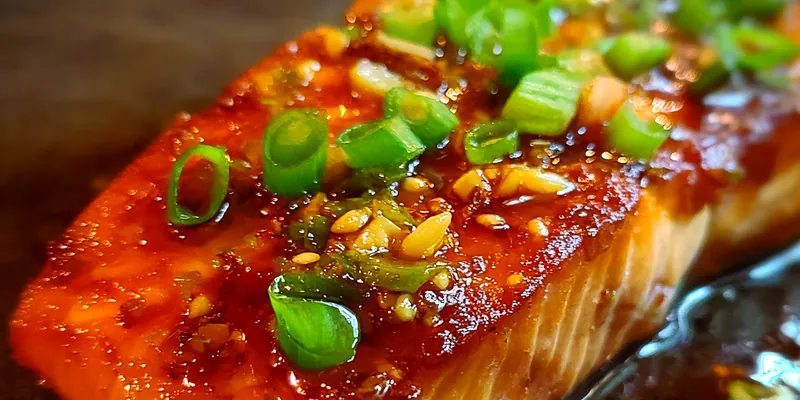
Why This Glazed Salmon with Scallions Recipe Works
This recipe stands out for its combination of sweet and savory flavors, making it a deliciously balanced meal. The salmon is marinated to absorb the rich flavors of soy sauce and honey, ensuring each bite is delicious. Additionally, the dish is quick to prepare, making it perfect for busy weeknights or entertaining guests.
The technique of marinating the salmon not only adds flavor but also helps to keep it moist during cooking. Baking the salmon ensures an even cook, while the final drizzle of the thickened sauce elevates the dish. This simple method yields a stunning and flavorful meal with minimal effort.
💡 Professional Tip
For perfectly cooked salmon, keep an eye on the cooking time. Salmon is done when it flakes easily with a fork. If you're unsure, using a meat thermometer can help; the internal temperature should reach 145°F (63°C). Also, using fresh ingredients will enhance the flavor of the glaze.
Frequently Asked Questions
Yes, you can marinate the salmon ahead of time. In fact, allowing it to marinate for longer can enhance the flavor. Prepare the sauce and keep it refrigerated until you’re ready to cook. Just be mindful of the cooking time, as you may need to adjust it slightly depending on the salmon's temperature when cooked.
If you're looking for a substitute for honey, maple syrup or agave syrup works well in this recipe. Both options will provide sweetness and a similar texture to the glaze. Adjust the quantity to your taste, as these alternatives can vary in sweetness.
Salmon is considered done when it flakes easily with a fork and is opaque throughout. A meat thermometer can be helpful; the internal temperature should reach 145°F (63°C). If the salmon is still translucent in the center, it needs more cooking time.
While it's best to enjoy the salmon fresh, you can freeze it after cooking. Ensure the salmon is cooled completely, then wrap it tightly in plastic wrap and place it in an airtight container. It can last in the freezer for up to three months. Thaw in the refrigerator before reheating.
Glazed Salmon pairs beautifully with steamed rice and sautéed vegetables for a complete meal. You can also serve it with a fresh salad or stir-fried noodles for added variety. The key is to complement the salmon's rich flavors without overpowering them.
Cooked salmon can last in the fridge for up to three days when stored in an airtight container. Make sure to let it cool to room temperature before refrigerating. Reheat gently to avoid drying it out.
Yes, you can prepare the components of this dish in advance. Marinate the salmon ahead of time and store it in the refrigerator. You can also prepare the sauce beforehand. Just ensure that you cook the salmon right before serving for the best flavor and texture.
To reheat glazed salmon, place it in a preheated oven at 350°F (175°C) for about 10-15 minutes or until heated through. This method helps maintain the moisture and prevents the salmon from becoming too dry. Alternatively, you can reheat it in the microwave using short intervals and covering it to retain moisture.
Recipe Troubleshooting Guide
Too Dry
Problem: The salmon has become dry during cooking.
Solution: To prevent dry salmon, avoid overcooking. Keep a close eye on the cooking time and use a thermometer to ensure it's perfectly cooked. If it does dry out, consider serving it with a little extra sauce to add moisture.
Not Crispy Enough
Problem: The skin of the salmon is not crispy.
Solution: For crispy skin, ensure the skin-side is dry before cooking and consider broiling the salmon for the last few minutes of cooking. A hot oven will help crisp up the skin beautifully.
Overcooked
Problem: The salmon has been overcooked, resulting in a tough texture.
Prevention: To prevent overcooking in the future, check the salmon a few minutes before the recommended cooking time. If overcooked, you can serve it with a flavorful sauce or broth to help mask the texture.
Undercooked Center
Problem: The center of the salmon is still raw.
Recovery: If the salmon is undercooked, return it to the oven for an additional few minutes until it reaches the desired doneness. Make sure to check the internal temperature to confirm it is fully cooked.
Burnt Exterior
Problem: The exterior of the salmon has burnt while cooking.
Prevention: To prevent burning, ensure the oven temperature is correct and keep an eye on the salmon as it cooks. If you notice it browning too quickly, lower the oven temperature.
Flavor Balance
Too Sweet: If the glaze is too sweet, add a splash of vinegar or lemon juice to balance it out.
Too Salty: If the dish is too salty, serve with a side of plain rice to absorb the saltiness.
Bland: To enhance flavors, consider adding freshly chopped herbs or a pinch of salt to brighten the dish.
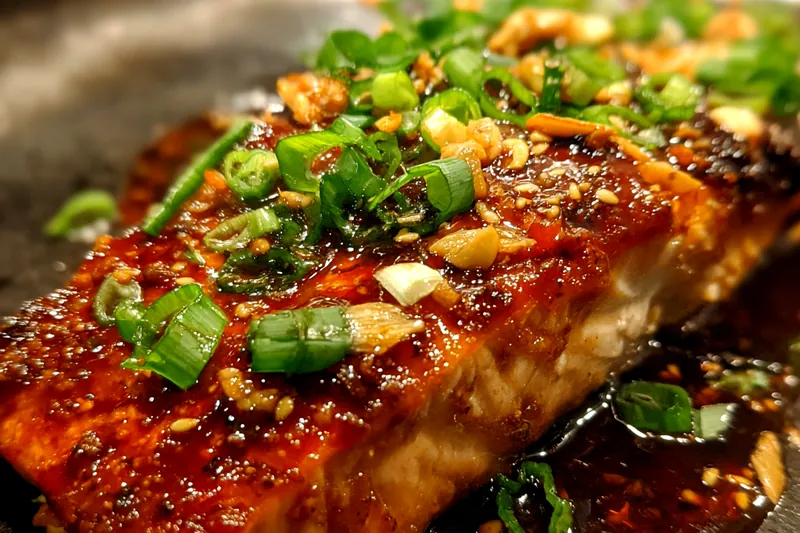
Essential Ingredients for Glazed Salmon with Scallions
The key ingredients in this recipe include fresh salmon, which should be of high quality for the best flavor and texture. The marinade is made from soy sauce, honey, and sesame oil, which together create a delicious glaze that enhances the natural flavors of the salmon. Scallions add a fresh, mild onion flavor that complements the glaze perfectly.
Quality ingredients are crucial in making this dish shine. Opt for wild-caught salmon if possible, as it typically has a richer flavor and better texture than farmed varieties. Fresh scallions should be vibrant and free from wilting, ensuring they add the right crunch and flavor to the dish.
Essential Ingredient Notes
- Salmon: Choose high-quality, fresh salmon for the best results. Look for firm fillets with a bright color and no strong fishy smell. Wild-caught salmon is typically preferred for its richer flavor profile.
- Soy Sauce: Opt for low-sodium soy sauce if you prefer a less salty dish. Regular soy sauce is great for that classic umami flavor but can be adjusted with other ingredients if needed.
- Scallions: Fresh scallions should be crisp and bright green. They add a mild onion flavor and a bit of crunch to the dish. Consider using both the white and green parts for added color and flavor.
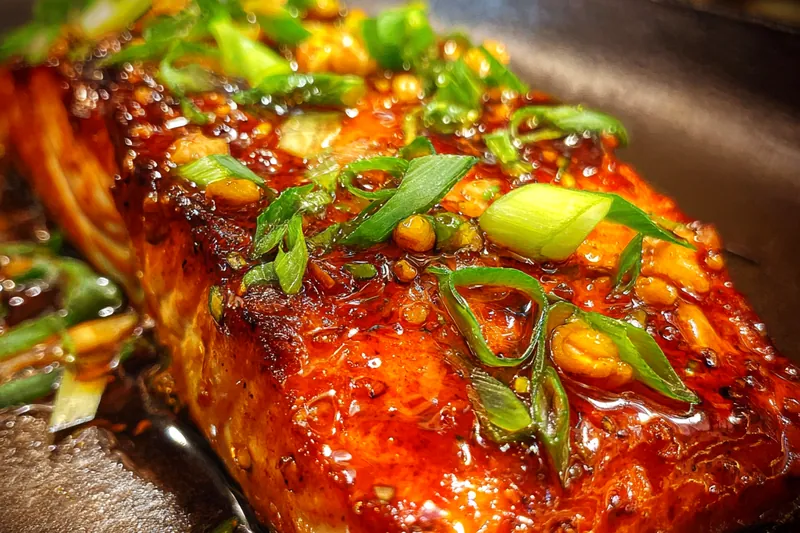
Step-by-Step Cooking Process
Cooking Glazed Salmon with Scallions is a straightforward process that ensures a flavorful outcome. Begin by preparing the marinade, which infuses the salmon with sweet and savory notes. Marinating the fish allows it to absorb the flavors, making it more delicious once cooked.
Bake the salmon at a moderate temperature to ensure even cooking without drying it out. The final step of thickening the sauce enhances the dish and provides a beautiful glaze to serve over the salmon. This method guarantees a restaurant-quality dish right at home.
Key Technique for Perfect Glazed Salmon with Scallions
Marinating the salmon is the key technique in this recipe. It allows the flavors to penetrate the fish, ensuring a delicious taste in every bite. Additionally, the final step of thickening the sauce not only enhances the flavor but also gives the salmon a beautiful glossy finish.
Glazed Salmon with Scallions
📋 Ingredients
Main Ingredients
- 1 cup soy sauceLow-sodium preferred
- 1/2 cup honeyOr agave syrup
- 1/4 cup rice vinegarFor acidity
- 1 tablespoon sesame oilFor flavor
- 4 cloves garlic, mincedEnhances flavor
- 1 tablespoon ginger, gratedFor a zing
For the Sauce
- 2 lbs salmon filletsFresh, skin on
- 1 bunch scallions, choppedGreen and white parts
- 1 tablespoon cornstarchFor thickening
- 1/4 cup waterTo mix with cornstarch
- 1 tablespoon sesame seedsFor garnish
- Salt and pepper to tasteTo season
- Lime wedges for servingAdds freshness
- Cooked rice for servingA side dish
- Fresh cilantro for garnishFor color
Instructions
Prepare the Marinade
In a bowl, whisk together soy sauce, honey, rice vinegar, sesame oil, garlic, and ginger.
Marinate the Salmon
Place salmon fillets in a shallow dish and pour the marinade over them. Allow to marinate for at least 30 minutes.
Preheat the Oven
Preheat your oven to 400°F (200°C).
Prepare Baking Sheet
Line a baking sheet with parchment paper and place the marinated salmon skin-side down.
Bake the Salmon
Bake the salmon for 20-25 minutes, or until it flakes easily with a fork.
Thicken the Sauce
In a small saucepan, combine the leftover marinade with cornstarch and water. Bring to a boil and stir until thickened.
Garnish with Scallions
Once the salmon is cooked, drizzle the thickened sauce over the fillets and sprinkle with chopped scallions and sesame seeds.
Serve
Serve the glazed salmon warm with lime wedges, cooked rice, and fresh cilantro.
Recipe Notes & Tips
Storage Tips
To store leftover glazed salmon, place it in an airtight container and refrigerate. It can last for up to three days. For best taste, consume it within the first two days. Reheat gently before serving.
Serving Suggestions
Serve Glazed Salmon with steamed jasmine rice and a side of stir-fried vegetables for a complete meal. You can also enjoy it atop a fresh salad for a lighter option.
Recipe Variations
Feel free to experiment with different marinades by adding citrus juice or spices to the glaze. You can also substitute the salmon with other fish or chicken for a different protein option.