Crispy Fish with Mango Salsa
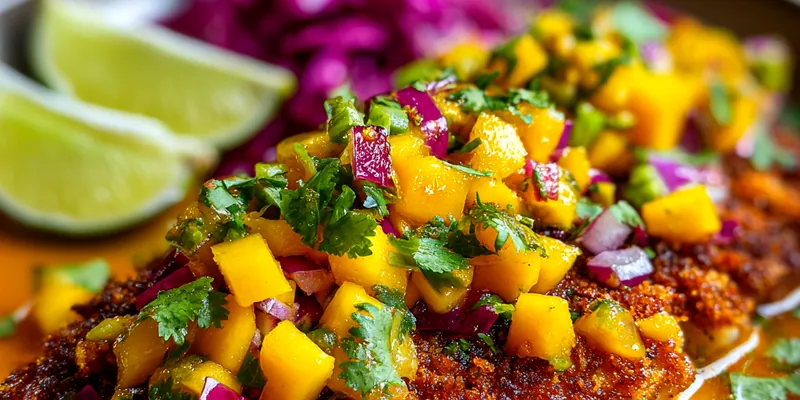
Crispy Fish with Mango Salsa is a delightful dish that combines the crunch of perfectly fried fish with the fresh sweetness of mango salsa. This recipe is not only quick to prepare but also bursting with vibrant flavors. Perfect for family dinners or entertaining guests, this dish is sure to impress. Join us in exploring the ease of creating this Asian-inspired meal.

Why This Crispy Fish with Mango Salsa Recipe Works
The key to this recipe is the combination of the crunchy fish and the bright, refreshing mango salsa. The simplicity of the ingredients allows each flavor to shine, making it a perfect meal for any occasion. The balance of textures and tastes makes every bite enjoyable. This dish not only looks fantastic but also offers a delightful taste experience.
Using fresh ingredients is crucial in achieving the best results. The frying technique ensures that the fish remains moist while developing a crispy exterior. The addition of the mango salsa complements the fish beautifully, providing a sweet and zesty contrast that enhances the overall dish.
💡 Professional Tip
To ensure your fish remains crispy, make sure the oil is hot enough before adding the fillets. A good test is to drop a breadcrumb into the oil; if it sizzles immediately, it’s ready. Also, avoid overcrowding the pan, as this can lower the oil temperature and lead to soggy fish.
Frequently Asked Questions
Yes, you can prepare the mango salsa ahead of time and refrigerate it for up to a day. However, for the crispiest fish, it’s best to fry it just before serving to maintain its texture. If you need to reheat the fish, do so in an oven to help retain its crispiness.
You can substitute the white fish with salmon or even shrimp if desired. Just keep in mind that cooking times may vary. Salmon will cook quicker than thicker fish fillets, so adjust the frying time accordingly.
The fish is done when it has a golden brown crust and flakes easily with a fork. The internal temperature should reach at least 145°F (63°C) for safe consumption. Be careful not to overcook, as this can dry out the fish.
While you can freeze the fish, it’s not recommended to freeze it after frying, as this can affect its texture. Instead, you can freeze the uncooked fish fillets and the salsa separately. Thaw them in the refrigerator before cooking.
This dish pairs well with jasmine rice or a light Asian noodle salad. You can also serve it with a side of steamed vegetables for a complete meal. A crisp green salad complements the flavors nicely, providing a refreshing crunch.
Crispy Fish can be stored in the refrigerator for up to 2 days. However, for the best texture, it is recommended to consume it within a day. The mango salsa can last for about 3 days in the fridge.
While you can prepare the salsa ahead of time, the fish is best cooked fresh to retain its crispiness. If you need to cook it in advance, consider frying it and then reheating it briefly in the oven just before serving.
The best way to reheat crispy fish is in the oven to maintain its texture. Preheat the oven to 350°F (175°C), place the fish on a baking sheet, and heat for about 10-15 minutes until warmed through and crispy.
Recipe Troubleshooting Guide
Too Dry
Problem: The fish ends up dry.
Solution: Ensure you do not overcook the fish. Keeping a close eye on the cooking time and using a thermometer can help prevent this issue.
Not Crispy Enough
Problem: The fish is soggy instead of crispy.
Solution: Make sure the oil is hot enough before frying, and avoid overcrowding the pan to maintain proper heat levels.
Overcooked
Problem: The fish has a rubbery texture.
Prevention: Cook the fish just until golden brown and avoid cooking for too long. Using thinner fillets can help with even cooking.
Undercooked Center
Problem: The fish is cooked on the outside but raw in the center.
Recovery: If you encounter this issue, slice the fish to check for doneness and return it to the oil if necessary, cooking it in shorter intervals.
Burnt Exterior
Problem: The outside of the fish is burnt while the inside is undercooked.
Prevention: Lower the heat slightly and extend the cooking time, flipping the fish more frequently to ensure even cooking.
Flavor Balance
Too Sweet: If the mango salsa is too sweet, add a squeeze of lime juice to balance the flavors.
Too Salty: If the dish is too salty, serve it with a side of unsalted rice or greens to dilute the saltiness.
Bland: If the fish is bland, seasoning it more generously before frying can enhance the flavor.
Essential Ingredients for Crispy Fish with Mango Salsa
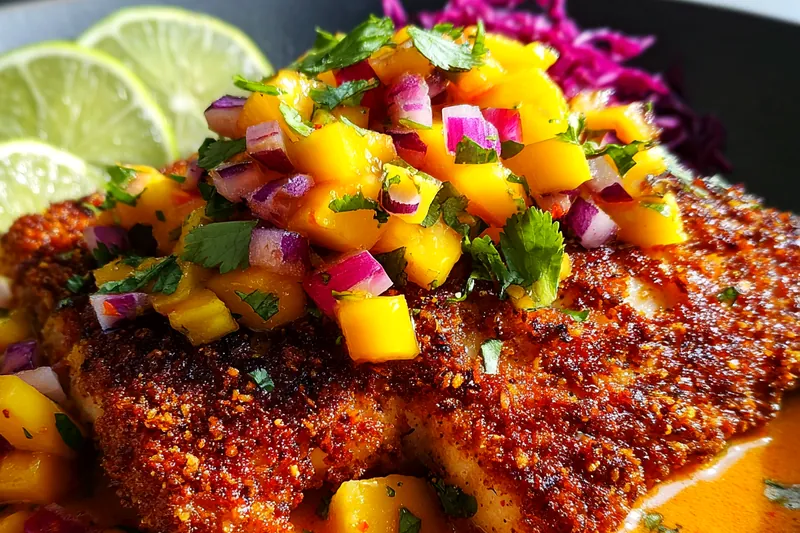
The main ingredient is fresh white fish, which provides a delicate flavor and a great base for frying. The mango salsa adds a refreshing contrast, bringing sweetness and acidity to the dish. Using high-quality fish and ripe mangoes significantly enhances the dish's overall flavor.
When selecting your fish, look for fillets that are firm and have a fresh ocean smell. For the mango salsa, ensure your mangoes are ripe but not overripe, as this will maintain their texture in the salsa. Fresh herbs like cilantro add depth and brightness to the dish.
Essential Ingredient Notes
- White Fish: Choose fillets that are thick and firm. Freshness is key for the best flavor and texture, so purchase from a reputable source.
- Mango: Select ripe, sweet mangoes that yield slightly to pressure. This ensures a juicy and flavorful salsa that complements the fish.
- Cilantro: Fresh cilantro adds a burst of flavor. Use it generously in your salsa for a vibrant taste that elevates the dish.
Step-by-Step Cooking Process
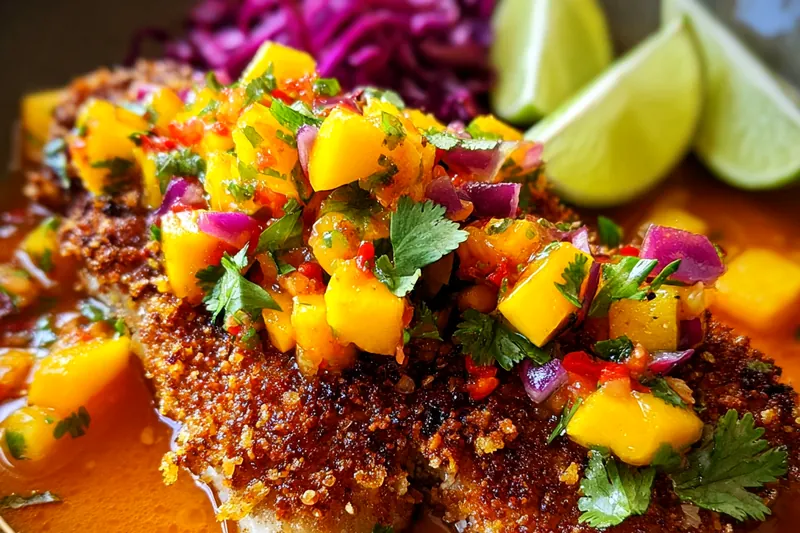
The cooking method involves breading the fish and frying it to achieve a crispy texture. Start by preparing your ingredients and setting up a breading station, which will streamline the process. Frying the fish at the right temperature allows for even cooking and a golden crust.
For perfect results, keep the fish in a single layer when frying and avoid moving it around too much. This ensures the crust forms properly and prevents it from falling apart. Once fried, serve immediately for the best taste and texture.
Key Technique for Perfect Crispy Fish with Mango Salsa
The most important technique is maintaining the right oil temperature throughout the frying process. This ensures that the fish cooks evenly and achieves that desired crispiness without absorbing excess oil.
Crispy Fish with Mango Salsa
📋 Ingredients
Main Ingredients
- 1 cup diced mangoRipe
- 1/2 red onionDiced
- 1 jalapeñoMinced
- 1/4 cup fresh cilantroChopped
- Juice of 1 limeFreshly squeezed
- Salt to tasteFor seasoning
For the Sauce
- 1 lb white fish filletsLike cod or tilapia
- 1 cup breadcrumbsFor coating
- 1/2 cup all-purpose flourFor dredging
- 2 large eggsBeaten
- 1 tsp garlic powderFor flavor
- 1 tsp paprikaFor seasoning
- Salt and pepper to tasteFor seasoning
- Oil for fryingVegetable or canola
Instructions
Prepare the Fish
Pat the fish fillets dry with paper towels and season with salt and pepper. Set aside.
Set Up Breading Station
In one bowl, place flour. In another bowl, beat the eggs. In a third bowl, combine breadcrumbs with garlic powder, paprika, salt, and pepper.
Bread the Fish
Dip each fish fillet first into flour, then into the egg, and finally coat with the breadcrumb mixture.
Fry the Fish
Heat oil in a large skillet over medium-high heat. Carefully add the breaded fish fillets and fry until golden brown, about 4-5 minutes per side.
Make Mango Salsa
In a bowl, combine diced mango, red onion, jalapeño, cilantro, lime juice, and salt. Mix well.
Serve
Place the crispy fish on a plate and top with mango salsa. Enjoy!
Recipe Notes & Tips
Storage Tips
Store any leftover fish in an airtight container in the fridge for up to 2 days. To keep the fish crispy, consider storing the salsa separately. Reheat the fish in the oven to regain its crunch.
Serving Suggestions
Serve Crispy Fish with Mango Salsa alongside jasmine rice or a light salad for a refreshing meal. It also pairs well with a cold Asian beer for a delightful experience.
Recipe Variations
Feel free to experiment with different types of fish or add other fruits to the salsa like pineapple or avocado. Adjust the spice level by adding more jalapeño or using a different type of chili pepper.